



Bathrooms create the perfect setup for moisture problems. Hot showers, damp towels, standing water, poor airflow, and dark corners can all invite mold before you even notice the first black spot. That is why I treat mold prevention tips for bathrooms as daily home maintenance, not just a cleaning task.
For most U.S. homes, the goal is simple: reduce humidity, remove standing water, improve ventilation, and fix small leaks before they become expensive repairs. When I stay consistent with these habits, the bathroom smells fresher, looks cleaner, and becomes much easier to maintain.
Why Does Mold Grow So Fast in Bathrooms?
Mold grows quickly in bathrooms because moisture collects on almost every surface. Steam lands on ceilings, mirrors, grout, caulk, tile, shower curtains, bath mats, towels, and vanity cabinets. If those surfaces stay damp, mold spores can settle and spread.
Bathrooms with no windows, weak exhaust fans, old grout, cracked caulk, or poor wall insulation usually have a bigger problem. In winter, cold walls can also create condensation when warm shower steam hits them. That is why bathroom humidity control matters as much as scrubbing.
I try to keep indoor humidity below 50% to 60%, and closer to 30% to 50% when possible. A small hygrometer can help you track the moisture level instead of guessing. If the number stays high after showers, the bathroom needs better airflow or a dehumidifier.
How Do You Use Ventilation to Prevent Mold in Bathroom Spaces?
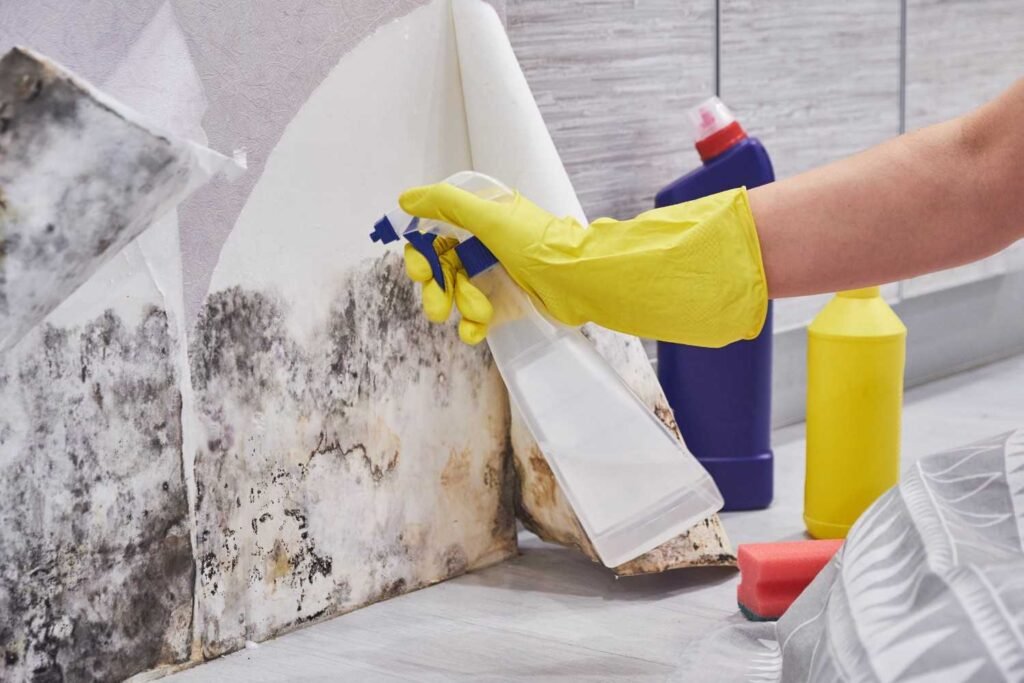
The best way to prevent mold in bathroom spaces is to move wet air out fast. I turn the exhaust fan on before bathing and leave it running for 20 to 30 minutes after the shower. This helps clear steam before it settles into walls, ceilings, and grout lines.
If your bathroom has a window, open it during or right after a shower when weather allows. I also keep the bathroom door open when the room is not in use because trapped air slows drying. Cross-ventilation works especially well in small bathrooms and older homes.
A compact electric dehumidifier can help if the bathroom has no window or weak natural airflow. In colder months, keeping the room around 73°F can also reduce condensation because warmer walls are less likely to collect water droplets.
Do not ignore the exhaust fan itself. Dust can block the grill and reduce airflow, so I would vacuum the fan cover every few months. If the fan still leaves the mirror foggy for a long time, it may be too weak for the room.
What Daily Habits Stop Shower Mold?
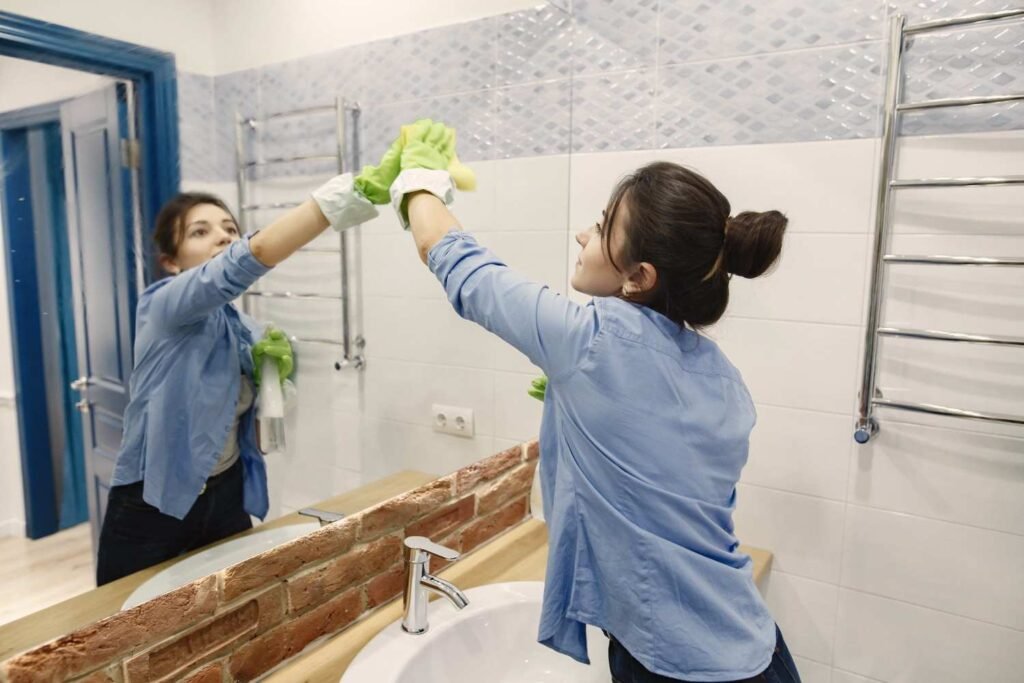
Daily drying is one of the most effective mold prevention tips for bathrooms because it removes the moisture mold needs. After showering, I use a squeegee or microfiber towel on glass doors, tile walls, acrylic panels, and wet corners. This simple step cuts down on standing water and soap scum.
The shower curtain also needs airflow. Instead of pushing it into one wet bundle, spread it fully across the rod so the folds can dry. If you use a liner, wash or replace it before stains become permanent.
Towels, washcloths, and bath mats should never stay bundled on the floor. Hang towels flat so air can reach both sides. If you use a heated towel rack, radiator, or sturdy drying bar, it can speed up drying in busy family bathrooms. Bath mats should also be lifted after use so water does not pool underneath.
Loofahs, body brushes, cleaning rags, and razors should drip-dry instead of sitting on wet ledges. I prefer shower storage with drainage because bottles and accessories can trap water underneath them.
How Can You Protect Grout, Caulk, and Shower Corners?
Grout and caulk are common places for shower mold because both sit close to water every day. Grout is porous, so it can absorb moisture if it is not sealed. I would inspect tile grout regularly and reapply grout sealer when water no longer beads on the surface.
Caulk needs just as much attention. If silicone caulk turns black, cracks, peels, or pulls away from the tub, scrubbing may not solve the problem. Replacing damaged caulk with mold-resistant bathroom caulk creates a tighter seal and helps stop moisture from slipping behind the wall.
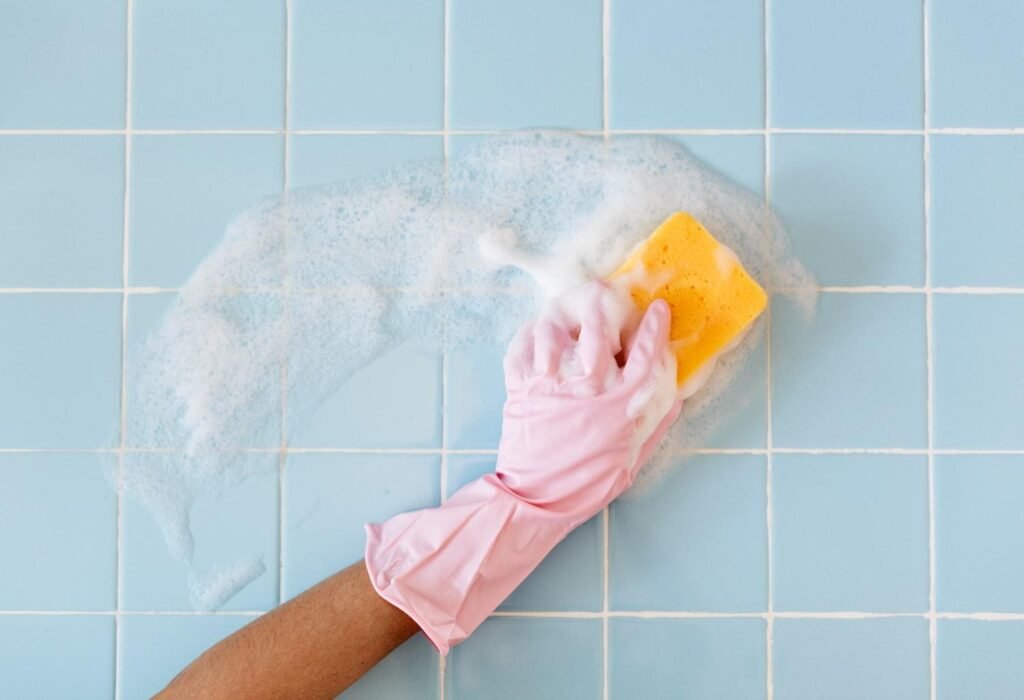
Shower corners need regular cleaning because soap scum, body oils, and water collect there. A weekly cleaning routine helps remove buildup before mold has a chance to cling to it.
What Is the Best Cleaning Routine for Bathroom Mold Prevention?
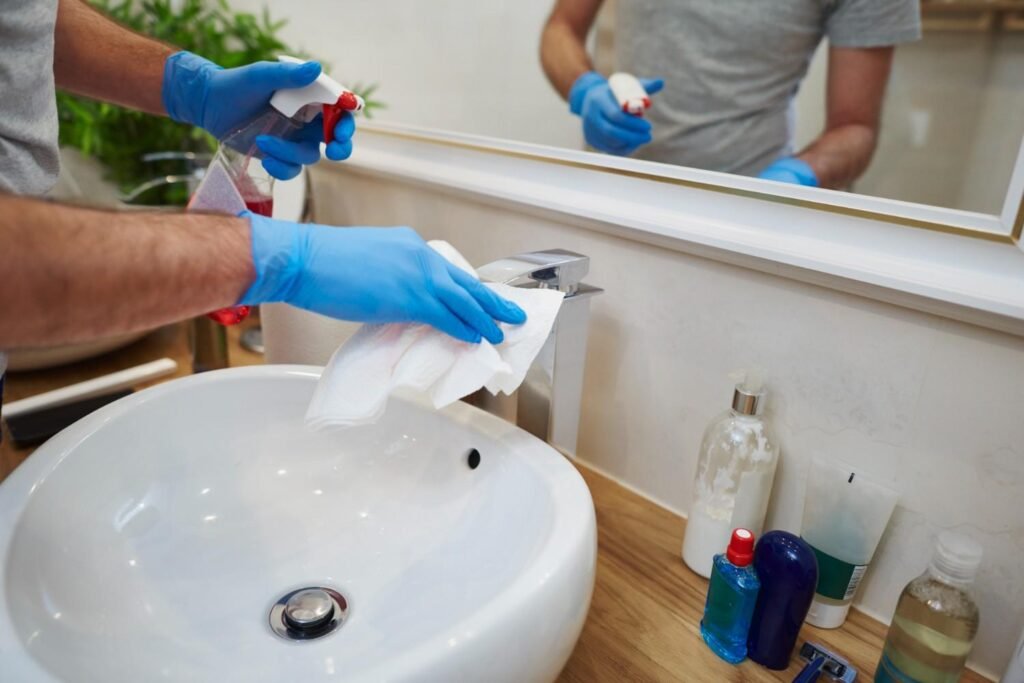
A smart cleaning routine focuses on prevention, not panic. Once a week, I clean the shower, tub, sink, toilet, floor, faucets, and high-moisture corners. I also check the shower liner, bath mats, grout lines, and vanity area.
Distilled white vinegar can be used as a weekly maintenance spray on many shower surfaces, but it should not be treated as a miracle fix for deep mold problems. Always check whether vinegar is safe for your specific material, especially natural stone.
Avoid relying on regular hand soap or dish soap for active mold spots. Soap residue can leave a film that supports buildup and may make regrowth easier. Use bathroom-safe cleaners, rinse surfaces well, and dry the area completely.
How Do You Prevent Bathroom Ceiling Mold?
Bathroom ceiling mold usually appears when steam rises and stays trapped. It often shows up above showers, near weak fans, or in bathrooms with poor insulation. If I see small spots on the ceiling, I look for two things first: ventilation problems and hidden leaks.
Bathroom-rated paint and mold-resistant primer can help after the surface has been cleaned and dried properly. However, paint alone will not solve the issue if steam keeps collecting. Better airflow, shorter moisture exposure, and fast drying matter more.
If ceiling stains return quickly, check for roof leaks, plumbing leaks, or moisture behind drywall. Recurring bathroom ceiling mold may need professional inspection.
What Hidden Leaks Should You Check?
Small leaks can cause big mold problems. I regularly check beneath the vanity, around the toilet base, under supply lines, near the tub edge, and around shower fixtures. Even a minor drip can warp cabinets, soften drywall, create a musty smell, and make basic indoor air safety tips for homes harder to maintain.
Fix plumbing leaks early instead of waiting for visible damage. If the floor feels soft, paint bubbles, or a musty odor keeps coming back, moisture may already be hiding behind the surface.
Frequently Asked Questions (FAQs)
1. What is the best way to prevent mold in a bathroom?
The best way is to control moisture daily. Run the exhaust fan, dry wet surfaces, hang towels properly, clean shower areas weekly, seal grout, repair leaks, and keep humidity below 50% to 60%.
2. How do I stop mold in a bathroom with no window?
Use a compact dehumidifier, keep the door open after showers, run a portable fan safely outside wet areas, wipe down shower surfaces, and avoid leaving wet towels or bath mats in the room.
3. Does a squeegee really prevent shower mold?
Yes, a squeegee helps because it removes standing water from tile, glass, and shower walls. Less water means less moisture for mold and mildew to use.
4. Why does mold keep coming back in my shower?
Mold usually returns because moisture, soap scum, cracked caulk, dirty grout, poor ventilation, or hidden leaks remain. Cleaning the stain is not enough if the moisture source stays active.
Final Thoughts
The best mold prevention tips for bathrooms are simple, but they work only when they become part of your routine. I focus on ventilation, humidity control, dry towels, clean grout, sealed caulk, raised bath mats, and quick leak repair.
When you remove standing water and keep the room dry, mold has fewer chances to grow. That means less scrubbing, fewer odors, and a cleaner bathroom that feels healthier every day.