
I used to think better posture meant forcing my shoulders back all day. That never worked for long because my body would get tired, stiff, and uncomfortable. Over time, I learned that Simple Ways to Improve Posture Naturally are really about small daily habits, stronger support muscles, smarter sitting, and better movement.
You do not need expensive gadgets or a complicated routine. You need to notice how your body rests, moves, works, drives, sleeps, and recovers through the day.
What Good Posture Really Means
Good posture is not about standing like a soldier. It means your head, shoulders, spine, hips, knees, and feet work together without unnecessary strain. Your spine has natural curves, and the goal is to support those curves instead of flattening, twisting, or collapsing them.
When posture is balanced, your ears sit over your shoulders, your shoulders stay relaxed, your chest feels open, your core supports your middle, and your weight feels even through both feet. This can reduce everyday pressure on your neck, back, hips, and shoulders.
Why Poor Posture Happens So Easily
Modern routines make poor posture almost automatic. Many people spend hours at desks, bend over laptops, scroll on phones, sit in cars, sleep on unsupportive pillows, or relax on soft couches that pull the spine out of alignment. Adding low impact workouts for everyday fitness can help support better posture through gentle, controlled movement.
The biggest problem is repetition. Looking down at a phone for a few minutes may not feel serious, but doing it daily can encourage forward head posture and rounded shoulders. Sitting without back support can make the lower back tired. Standing with weight on one leg can create uneven pressure. Poor posture usually builds slowly, which means it also improves through steady daily correction.
Simple Daily Habits That Improve Posture
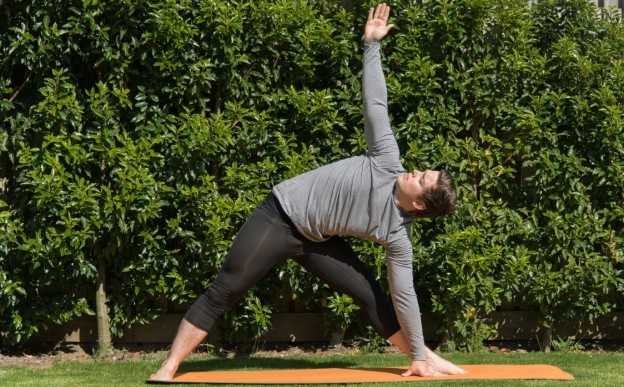
Start with awareness. A quick wall check can help you understand your natural position. Stand with your back near a wall and notice whether your head, upper back, and hips line up comfortably. Do not force the position. Use it as a reset.
Move every 30 to 60 minutes. Even a good chair cannot protect your posture if you stay frozen for hours. Stand up, walk around, roll your shoulders, stretch your chest, or take a few slow breaths. Movement teaches your body not to lock into one strained position.
Keep your screen at eye level whenever possible. If you use a laptop, raise it with a stand or a stable stack of books and use a separate keyboard if available. Your eyes should look forward, not down toward your lap.
Use the chair back instead of sitting on the edge all day. Your lower back needs support. Keep both feet flat on the floor, relax your shoulders, and avoid crossing your legs for long periods. Your elbows should stay close to your body so your neck does not carry extra tension.
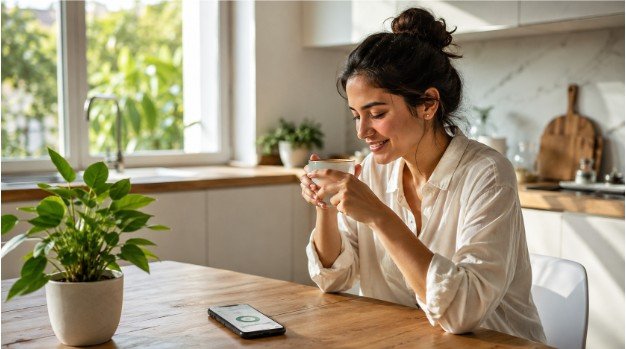
Phone posture matters too. Bring your phone closer to eye level instead of dropping your chin toward your chest. This one habit can make a major difference for people who feel tightness in the neck and upper back.
Best Natural Exercises for Better Posture
Chin tucks are useful for forward head posture. Sit or stand tall, look straight ahead, and gently draw your chin backward as if making a double chin. Hold for a few seconds, then release. Keep it gentle.
Wall angels help open the chest and activate the upper back. Stand against a wall, bend your elbows, and slowly move your arms upward and downward while keeping control. Do not force your shoulders if they feel tight.
Shoulder blade squeezes are simple and effective. Sit tall, pull your shoulder blades slightly back and down, hold briefly, then relax. This strengthens the muscles that help prevent rounded shoulders.
A doorway chest stretch can reduce tightness from computer work. Place your forearms on both sides of a doorway and step forward gently until you feel the front of your chest open.
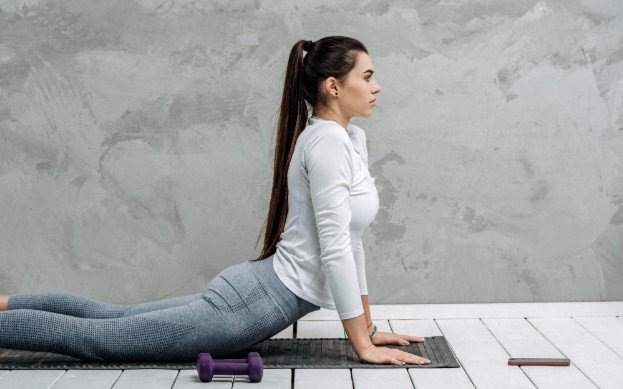
Cat-cow pose stretches help the spine move. Start on your hands and knees, round your back slowly, then lower your belly and lift your chest gently. Move with your breath.
Glute bridges support posture by strengthening the hips and lower body. Lie on your back with knees bent, press through your heels, lift your hips, pause, and lower slowly.
A plank or modified plank trains the core. You do not need to hold it for minutes. A short, controlled hold with good form is better than a long hold with a sagging back.
How to Improve Posture While Sitting, Standing, Driving, and Sleeping
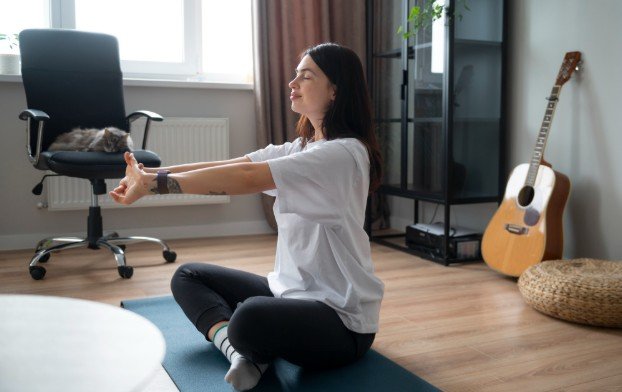
For sitting, keep your hips back in the chair, feet flat, shoulders relaxed, and screen straight ahead. Avoid leaning toward the screen. Bring the work closer to you instead.
For standing, keep weight balanced on both feet. Soften your knees slightly, keep your chest open, and avoid pushing your hips too far forward. If you stand for long periods, switch positions and use supportive shoes.
For driving, adjust the seat so your back touches the seatback and your arms reach the wheel without hunching. Keep your head close to the headrest and avoid reclining too far.
For sleeping, choose a pillow that keeps your neck in line with your spine. Side sleepers may benefit from a pillow between the knees. Back sleepers may feel better with a small pillow under the knees. Stomach sleeping often strains the neck, so reduce it if possible.
When to Get Professional Help
Natural posture habits can help many people, but they are not a replacement for medical care. If you have sharp pain, numbness, tingling, weakness, balance problems, pain after an injury, or discomfort that does not improve, speak with a qualified healthcare professional or physical therapist. A personalized assessment can identify what your body needs.
Frequently Asked Questions
1. Can posture be improved naturally?
Yes. Most people can improve posture naturally by combining better sitting habits, regular movement, stretching, core strength, and upper-back exercises.
2. How long does it take to see better posture?
Some people feel less stiffness within days, but visible posture changes usually take several weeks of consistent practice. The key is daily repetition.
3. What is the easiest posture exercise to start with?
Chin tucks, shoulder blade squeezes, and doorway chest stretches are easy starting points because they need no equipment and can be done almost anywhere.
4. Can Simple Ways to Improve Posture Naturally help with desk-related stiffness?
Yes. A better desk setup, screen height, chair support, movement breaks, and simple stretches can reduce stiffness caused by long sitting.
Final Takeaways
I believe posture gets better when the routine feels realistic. You do not need to change your whole life in one day. Start by raising your screen, moving more often, sitting with support, stretching tight areas, and strengthening the muscles that hold you upright. Small corrections repeated daily can help your body feel lighter, stronger, and more comfortable.